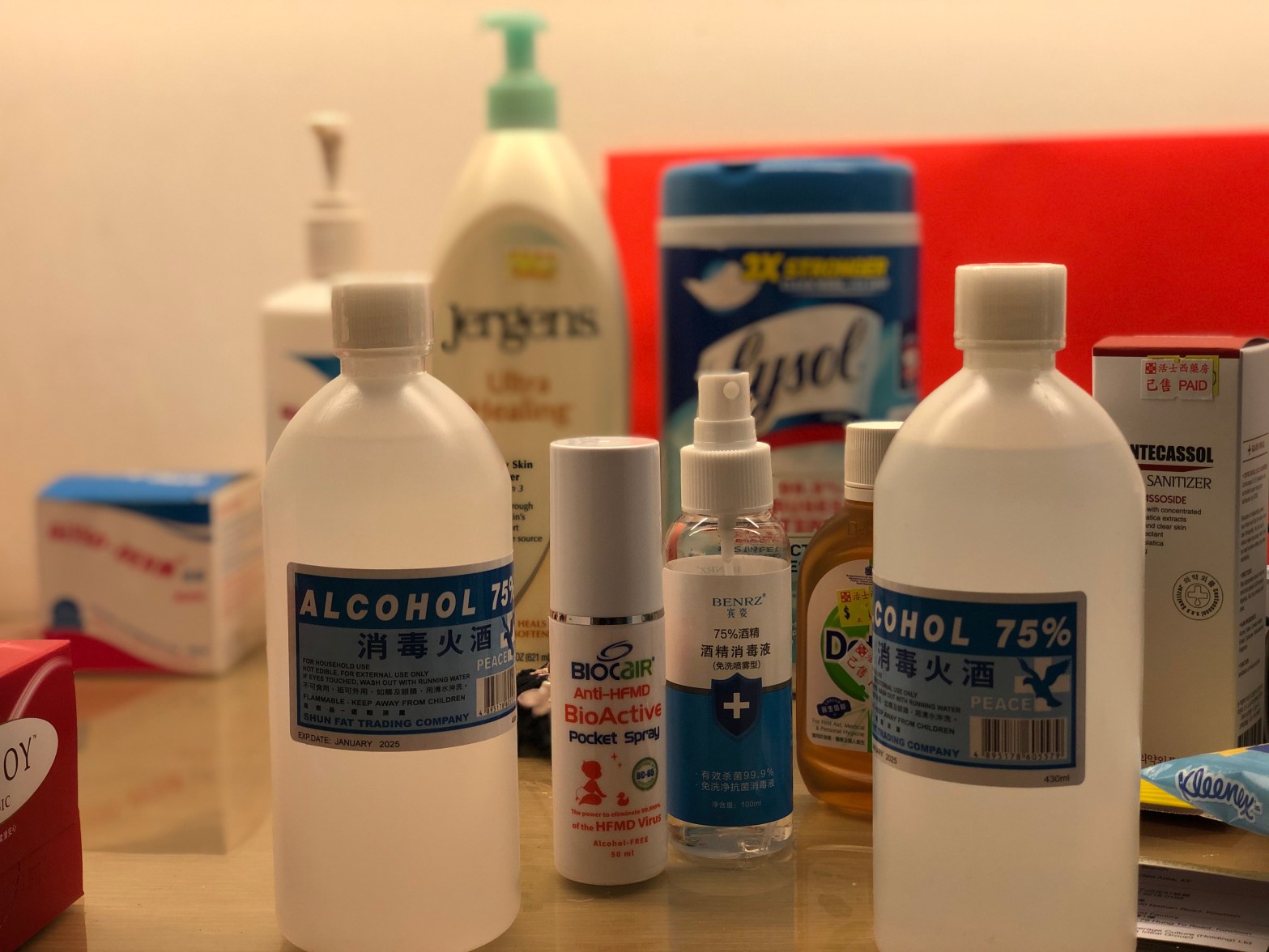
Everyday of the Epidemic 疫情下的日常
而家成檯都係消息用品
全人類都集體OCD
周圍都封關
This is what our daily lives look like living in Hong Kong under the 2020 coronavirus pandemic. I guess I should be thankful, however, because although the Hong Kong government was not able to act fast enough and has many shortcomings, at least the infection control knowledge of the general public is much stronger. Many people spontaneously wore face masks when going out, even before the government has to issue any advice (hence the face mask shortage, you could say). But the face mask shortage is now slowly being replenished, and there are stock, albeit in small doses and high prices. Car factories, because they had essentials to produce the filters used in car seats, are re-engineered to produce face masks to further meet the shortage. Most people stayed home and away from crowded places, and businesses made arrangements and allowances for employees to work from home, or in alternate smaller batches. The government further limited non-essential services and many schools closed down or switched to online classes.
On the other hand, Canadian government instead of educating the general public how to properly wear masks and hand hygiene, chose to advise people NOT to wear masks. Yes, face masks can only provide limited prevention of spreading the illness. However, due to the prolonged infectious but asymptomatic period as the coronavirus, face masks can prevent those unknowing undiagnosed individuals from spreading the disease further. Maybe it was from a economic standpoint, or the fear or causing public panic, the government chose to downplay the seriousness of the Coronavirus. The lack of government concern, instead induced further panic, and now we see hordes of people stockpiling toilet paper and can food. And did it really take your wife to be infected for our prime minister to realize the seriousness of this pandemic? Who knows. But what we do see is a sudden change in policies. Almost overnight, borders are closed (except permanent residents, families of residents, American citizens, flight crews and those with diplomatic immunity), incoming flights are redirected to one of only four airports in the country (YYZ Toronto Pearson, YUL Montreal Trudeau, YVR Vancouver International Airport, and YYC Calgary International Airport), and a 14-day quarantine is under discussion.
But to be fair, I am looking through the (figurative) spectacles of a (non practicing) nursing personnel, where it’s better to be safe than sorry, where prevention is better than cure, and economics was never my strong subject. And it could always be worse, ahem, Britain.
 hihi! DaDa